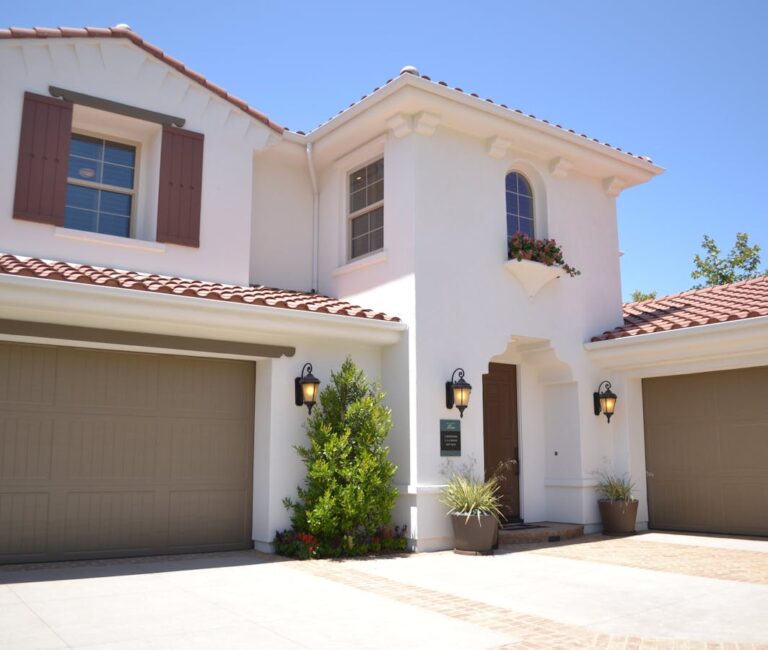
8 Feng Shui House Types: Where Your Bed, Desk, and Front Door Belong
Does your house have a type of its own?
Most people who measure a home stop at the front door. They note which way the door faces, decide the house is “south-facing,” and go back inside. In the Eight Mansions school of feng shui, the direction that matters is the other one: the direction the house sits in, the side at your back when you stand at the door looking out.
The sitting direction gives the house a type, and the type decides three things:
- Which four directions suit the building. Each of the eight house types carries four favourable directions and four that are better left to kitchens, bathrooms and storage.
- Where the bed and the desk belong. Position settles the body. Direction settles which way the head and the gaze point.
- How the nine life zones land on your plan. The same nine zones, rotated onto your own compass.
Quick answer
A house type is named after the direction the house sits in, which is the opposite of the direction the front door faces. Sitting north makes a Kan house, sitting northeast makes a Gen house, and so on through the eight trigrams. Every type belongs to one of two families. Kan, Zhen, Xun and Li houses favour north, east, southeast and south. Kun, Dui, Qian and Gen houses favour southwest, northwest, west and northeast. Point the head of the bed, and the facing side of the desk, toward one of the four directions that suit your house, and leave the other four to the kitchen, the bathrooms and the storage.
Table of Contents
- Reading a House’s Own Chart
- The Eight House Types
- The Nine Life Zones
- Room by Room
- What a House Type Does Not Decide
- Conclusion
Reading a House’s Own Chart
The house has a chart before you move any furniture, and it is set by the building, not by the people living in it. Read it once and it stays the same for as long as you are there.
Sitting Beats Facing
A house is named after the direction it sits in, not the direction it looks. If the front door faces south, the house sits to the north and it is a Kan house. If the door faces north, the house sits south and it is a Li house.
The logic is a person sitting in a chair. What a person faces matters, but what is behind them — their support — is what the classical texts watch most closely. A house is read the same way: the back of the building names it.
Some practitioners name a house after its facing direction instead. Both conventions exist in print. What matters is that you choose one and stay with it, because switching halfway through a floor plan produces two contradictory charts for the same home.
A house is named after its back, not its front.
Ten Minutes With a Compass
Stand outside, a few steps back from the door, and face the door. Take the bearing of the direction you are facing — that is the facing direction. Add 180 degrees for the sitting direction, which is the one that names the type.
Take the reading three times and keep the number that repeats. Phone compasses drift near metal, so step away from the car, the porch railing and the meter box. Each direction covers 45 degrees, and a reading that lands within a few degrees of a boundary is worth repeating on another day before you commit to it.
Write the number down. Once the house has a sitting direction, everything after this is a lookup.
Measure once, in writing, and stop measuring.
The Eight House Types
Eight possible sitting directions, eight trigram names. The whole chart fits on one card, and once you have seen it a few times you will not need to look it up again.
Two Families, Eight Types
The eight types fall into the same two families that people fall into. Kan, Zhen, Xun and Li houses belong to the east family, and Kun, Dui, Qian and Gen houses belong to the west family.
The practical result is a shortcut worth remembering. Every east family house, whichever one it is, favours the same four directions: north, east, southeast and south. Every west family house favours southwest, northwest, west and northeast. You do not need a different list for each type — only the family list, plus the type name for the record.
| House | Sits | Faces | Family | Suits these four directions |
|---|---|---|---|---|
| Kan | North | South | East | N, E, SE, S |
| Zhen | East | West | East | N, E, SE, S |
| Xun | Southeast | Northwest | East | N, E, SE, S |
| Li | South | North | East | N, E, SE, S |
| Kun | Southwest | Northeast | West | SW, NW, W, NE |
| Dui | West | East | West | SW, NW, W, NE |
| Qian | Northwest | Southeast | West | SW, NW, W, NE |
| Gen | Northeast | Southwest | West | SW, NW, W, NE |
How to Read the Chart
Read the card left to right. The trigram name is the house type. The sitting direction is what a compass tells you. The facing direction is the one you measured at the door. The four directions in the last column are the ones to use for the bed, the desk and the seat you use most.

Four filled sectors on each wheel are the whole chart. Read the family column and you already have them.
The Nine Life Zones
Underneath the house type sits a second map, the one most people picture when they hear the word bagua: nine zones, each tied to one part of life.
Why the Zones Are Coloured the Way They Are
The nine zones follow the Later Heaven arrangement of the trigrams, which anchors each trigram to a compass direction. Career sits north, knowledge northeast, family east, wealth southeast, fame south, relationships southwest, children and creativity west, helpful people and travel northwest, and health holds the centre.
Each direction also carries one of the five elements. North is water, east and southeast are wood, south is fire, west and northwest are metal, and northeast, southwest and the centre are earth. That is where the colours in the chart come from, and why the groupings are not arbitrary: wood feeds fire, fire makes earth, earth bears metal, metal carries water, and water feeds wood again.

Wood, fire, earth, metal, water. Five elements, five colours, one repeating cycle.
The colours are a key to the logic, not a shopping list. You are not being asked to repaint a room purple because the wealth zone sits there. Reading the chart is the point; the room can stay the colour you actually like.
The chart is a map of relationships. Decoration is optional.

One chart, nine zones, four colours of element. North is at the top, and the front door marker shows where the entry falls on this example plan.
Laying the Zones Over a Floor Plan
Print the floor plan, or sketch it, and mark true north on the paper. Draw a rectangle around the whole living area, divide it into three columns and three rows, and read the zones off the chart.
The centre square is not automatically a room. In most homes the centre is a hallway, a piece of the living room, or the middle of an open plan. Treat it as the part of the home people pass through most, and keep it clear and reasonably lit.
An L-shaped plan needs one correction before it works: extend the rectangle so it covers the missing area, then divide the whole rectangle. The zones are drawn on the complete shape, not on the outline you happen to own.

Draw the rectangle once, divide it once, and the room decisions stop being guesswork.
Room by Room
Two rooms carry most of the practice, and both come down to position before direction.
The Bed
Position first. The headboard goes against a solid wall, the door is visible from the pillow, and the body does not lie in a straight line with the door. These three rules hold in every house type and every room size, and they matter more than any compass reading.
With the bed placed well, the head direction comes from the house. Turn the head toward one of the four directions that suit your type, and leave the mirror and the television where they cause the least disturbance.
If the room is too tight to turn the bed, a bench at the foot or a rug under the bed gives the foot of the bed a boundary and the sleeper a little distance from the door. That is a complete solution, not a compromise.

The bed follows the room. The house type decides which way the head points once the bed has a good position.
The Desk
The command position comes first here too: a solid wall behind the chair and a clear view of the door. Sitting with your back exposed keeps a low-level alertness running all day, and focus is the first thing it costs.
After that, face one of the four directions that suit the house. Desk work is where attention is tested hardest, which is why this is the room where orientation is easiest to notice.
If facing a favourable direction would put your back to the door, keep the command position and accept the mismatch. A desk in the right place facing a neutral direction beats a desk facing a perfect direction from the wrong place.
Where the desk sits outranks which way it faces.
Kitchen, Bath, and Entry
The four directions a house does not favour are not damaged space. They are simply not the four you reserve for rest and concentration, which makes them the natural places for the kitchen, the bathroom, the laundry and the storage.
Water is the reason. Kitchens and bathrooms are built around plumbing, drainage and heat, and in the classical reading those functions belong away from the sectors where a person sits still for hours. The modern version of the same advice is unglamorous and true: keep water contained, keep the drain clear, and keep the kitchen counter from becoming the place things are abandoned.
The entry is separate from all of this. Whatever the house type, the front door should open onto a clear, lit, uncluttered space. That single habit does more for how a home feels than any correction applied further inside.
Leave the water rooms in the four quiet sectors, and keep the doorway clear.
Renters, and Rooms With Only One Layout
Most people cannot choose a home by trigram, and renters cannot change the type of a building at all. The type was set when the building went up.
What you can change is the movable layer: which way the bed’s head points, which way the desk faces, which chair you sit in most, and the state of the entry. A clear, well-lit entry helps a small apartment more than any correction applied to a wall you are not allowed to touch.
When a room offers exactly one workable layout, take it and stop. A bed with a solid headboard, a clear view of the door and no draught is a good bed. The chart is there to help you choose between options, not to manufacture anxiety where there are none.

One rug can hold a zone together. That is the whole idea, applied with furniture instead of rules.
What a House Type Does Not Decide
It does not describe personality. Everyone born in the same year and gender category shares one number, and buildings sharing a sitting direction share one type, which rules out any serious claim about character on either side.
It does not change from year to year. Your house type is fixed for as long as the building stands. The annual layer belongs to flying stars, a separate system with its own charts, and mixing the two produces contradictions.
It does not rank buildings as good or bad. A Gen house is not worse than a Kan house. Each of the eight has four supportive sectors and four quieter ones, and the difference between them is where those sectors fall, not how much they are worth.
And it does not override the practical rules. A bed against a solid wall in the wrong compass sector beats a bed floating in the middle of the room in the right one.
A house type is an orientation, not a verdict.
Conclusion
Eight house types, two families, four directions each. The building is named after the side it sits on, and the four directions that suit it follow from its family rather than from anything you do inside.
Start with the compass and get the sitting direction onto paper. Then place the bed and the desk with the ordinary rules — solid support behind, door in view, no sleeping in line with the door — and turn them toward one of the house’s four directions where the room allows it.
Where the room will not cooperate, leave it. Clear the entry, light the centre, contain the water rooms, and let the layout be what it is. The eight types are a way of reading a building, and a home you can rest in is the point of the reading.